Owners often notice that a senior dog who used to stay lean without much effort starts carrying extra weight, even when the food bowl hasn’t changed. It’s one of the most common and most overlooked health shifts in aging dogs, and it tends to creep up slowly enough that it’s easy to miss until a vet points it out at a checkup.
At Golden Years Pets, we focus specifically on the health issues that matter most once a dog crosses into the senior years, generally considered to start around age seven, sometimes earlier for large and giant breeds. Weight management is one of the issues that affects nearly every aging dog in some form, which is why this guide looks at it across small, medium, and large breeds in one place rather than splitting it into separate articles.
Why Weight Control Becomes Harder as Dogs Age
Several things change at once in an older dog’s body, and together they make weight gain much easier and weight loss much harder than it was in younger years.
Metabolism slows gradually with age, so a senior dog typically needs fewer daily calories than it did as an adult, even if its activity level has only dropped slightly. At the same time, muscle mass tends to decline (a process sometimes called sarcopenia), which lowers the body’s resting energy needs even further. Add in joint stiffness, reduced stamina, or conditions like arthritis that make long walks less appealing, and the combination of lower calorie needs plus less movement is a common recipe for slow, steady weight gain.
Some veterinary surveys have estimated that well over half of dogs in the United States are classified as overweight or obese, and that proportion tends to be higher among middle-aged and senior dogs specifically. It’s a widespread issue, not a sign that an owner has done anything wrong.
How to Tell If Your Senior Dog Is Overweight (Body Condition Score)
The bathroom scale number matters less than how the body is actually shaped, which is why vets rely on a body condition score (BCS) rather than weight alone. A simple hands-on check can be done at home between vet visits:
- Ribs: You should be able to feel the ribs with light pressure, without having to dig through a thick layer of fat, but they shouldn’t be sharply visible either.
- Waist: Looking down from above, there should be a visible narrowing behind the ribs. A straight or barrel-shaped torso often signals extra weight.
- Abdominal tuck: From the side, the belly should tuck upward behind the ribcage rather than hanging level with the chest.
If the ribs are hard to find, the waist has disappeared, or the belly sags, it’s reasonable to assume some degree of excess weight is present. A vet can assign a more precise score (commonly on a 1-to-9 scale) and track it over time, which is far more useful than chasing a specific number on a scale.
Weight Management by Size: Small, Medium, and Large Breed Considerations
The underlying biology of weight gain is similar across all dogs, but the practical details, how much extra weight matters, how it shows up, and how aggressively it should be addressed, do shift somewhat by size category.
Small Breed Senior Dogs
On a small dog, even a pound or two of extra weight represents a much larger percentage of total body mass than the same amount would on a large breed. Small senior dogs are prone to issues like luxating patellas, tracheal sensitivity, and early dental disease, all of which can be worsened by extra weight. Portion control is especially important here because small adjustments in food amount have an outsized effect relative to body size, and it’s easy to overfeed when measuring “by eye” with a small kibble scoop.
Medium Breed Senior Dogs
Medium breeds often sit in a middle ground where weight gain is gradual enough to go unnoticed for months. Many medium-sized senior dogs are moderately active but no longer getting the same length or intensity of exercise they had as younger adults, which quietly reduces calorie burn. Regular body condition checks, rather than relying on how the dog “looks” day to day, tend to catch the drift early.
Large Breed Senior Dogs
For large and giant breeds, excess weight places significant extra load on joints that may already be dealing with age-related wear, and it is strongly linked to faster progression of arthritis and reduced mobility. Large senior dogs also tend to lose muscle mass more noticeably with age, so a dog can look “about the same” on the scale while actually carrying more fat and less muscle than before. Weight management in large breeds often works hand in hand with joint support strategies, since the two issues tend to compound each other.
Building a Safe Weight-Loss Plan for an Older Dog
Weight loss in senior dogs needs to be approached more carefully than in younger dogs, since rapid changes can affect energy levels, muscle preservation, and underlying conditions that are more common with age.
- Start with a vet visit. Unexplained weight gain (or loss) in an older dog should first be checked for underlying causes such as thyroid issues, Cushing’s disease, or arthritis-related inactivity, rather than assumed to be simple overfeeding.
- Adjust portions gradually. A vet can help calculate an appropriate daily calorie target based on current weight, body condition, and activity level, and a gradual reduction is generally safer than a sudden, drastic cut.
- Measure food precisely. Switching from scooping by eye to using a kitchen scale or measuring cup is one of the simplest changes that tends to make a real difference.
- Keep movement realistic. Shorter, more frequent walks are often easier on aging joints than one long walk, and low-impact options like swimming can help maintain activity without excess strain.
- Limit extras. Treats and table scraps add up quickly in a smaller daily calorie budget; low-calorie options or using a portion of the regular kibble as training treats can help.
Common Mistakes That Stall Weight Loss in Senior Dogs
A few recurring patterns tend to slow down progress even when an owner is making a genuine effort:
- Underestimating treats and scraps. These calories often aren’t counted toward the daily total, even though they can represent a meaningful share of it.
- Cutting food without addressing mobility. If joint pain is limiting exercise, diet changes alone may not be enough; pain management and mobility support often need to happen alongside dietary adjustments.
- Expecting fast results. Safe weight loss in an older dog is typically slow and gradual; dramatic week-to-week changes aren’t the goal and can be a red flag rather than a success.
- Skipping follow-up weigh-ins. Regular rechecks, whether at home or at the vet, make it possible to catch a stalled plan early and adjust before frustration sets in.
When to See a Vet
A veterinary visit is a sensible starting point before beginning any weight management plan for a senior dog, and it becomes especially important if any of the following are present:
- Noticeable weight gain or loss without a clear change in diet or activity
- Increased thirst, urination, or appetite alongside weight changes
- Reduced energy, exercise intolerance, or new reluctance to move
- Signs of joint pain, such as stiffness, limping, or difficulty with stairs
- A body condition score that seems to be trending in the wrong direction despite dietary changes
A vet can rule out medical causes of weight change, confirm an appropriate calorie target, and help monitor progress safely over time, which matters more in senior dogs than in younger, otherwise healthy ones.
Quick Takeaways
- Weight gain in senior dogs is usually driven by a combination of slower metabolism, muscle loss, and reduced activity, not simply “eating too much.”
- Body condition score, checking ribs, waist, and abdominal tuck, is a more useful measure than weight alone.
- Small breeds are sensitive to even small amounts of extra weight; large breeds face a stronger link between excess weight and joint strain.
- Safe weight loss in an older dog should be gradual and ideally guided by a vet, especially if other health changes are present.
- Unexplained weight changes deserve a vet visit before starting any diet plan, since underlying conditions can be the real cause.
For related reading, see our complete guide to joint and hip health in senior dogs, our guide on how to choose a good veterinarian, and our overview of when to get pet insurance for a senior dog. You can also explore more senior pet care topics on our homepage.
This article is for general informational purposes only and is not a substitute for professional veterinary advice, diagnosis, or treatment. Always consult your veterinarian regarding your pet’s specific health needs.
Aging gracefully, together.
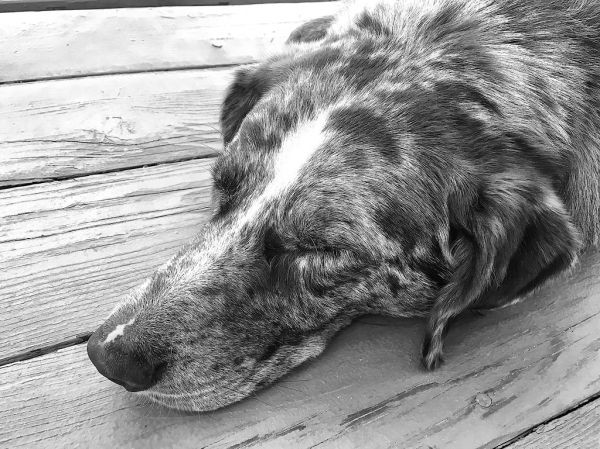
Photo by cogdogblog on Flickr, licensed under CC0 1.0.