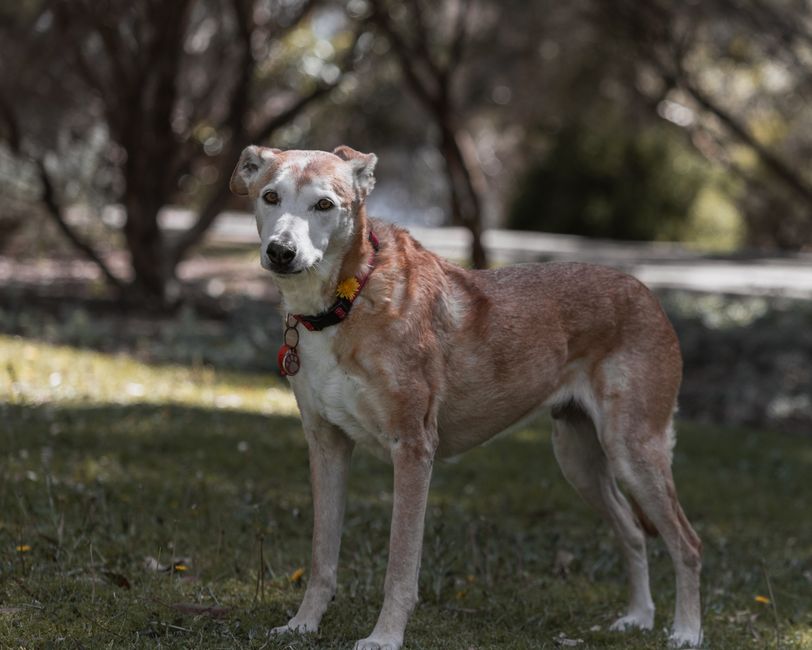
As dogs move into their senior years, many owners notice a gradual change that is easy to miss at first: a dog who once came running at the sound of a leash clipping together now seems to sleep through it. Hearing loss is one of the most common age-related changes in older dogs, yet it is also one of the easiest to mistake for stubbornness, selective listening, or simple tiredness. Understanding how hearing changes with age, and how to support a dog who is losing some or all of their hearing, can make a real difference in safety and quality of life during the senior years.
Why Hearing Changes as Dogs Age
Like people, dogs can develop age-related hearing decline known as presbycusis. This happens as the delicate nerve structures and hair cells inside the inner ear gradually wear down over years of use. The process is usually slow and progressive rather than sudden, which is part of why it often goes unnoticed until it becomes fairly advanced. Veterinary sources generally note that some degree of hearing decline becomes noticeable in many dogs by around 10 to 12 years of age, though the exact timing and severity vary widely from dog to dog. Genetics, noise exposure over a lifetime, chronic ear infections, and general health all appear to play a role in how quickly hearing changes.
It is worth noting that hearing loss in senior dogs is rarely an isolated issue. Vision changes, cognitive decline, and reduced mobility often develop around the same time, and these overlapping changes can make it harder for owners to pinpoint exactly what is going on. A dog who seems “out of it” may actually be dealing with reduced hearing, reduced vision, or both at once.
Recognizing the Signs of Hearing Loss in Senior Dogs
Because the decline is usually gradual, the early signs can be subtle. Owners often notice one or more of the following changes before they consider hearing loss as the cause:
- No longer responding to their name being called, especially from another room
- Failing to react to the doorbell, other pets barking, or the sound of a food bag opening
- Sleeping unusually deeply and not waking to normal household noise
- Startling more easily when approached from behind or woken up suddenly
- Seeming confused or slower to respond to familiar verbal cues
- Barking more than usual, which can happen when a dog can no longer hear their own volume clearly
A single missed cue is not necessarily meaningful, since every dog gets distracted. A consistent pattern across different sounds and situations is a stronger signal that hearing is genuinely declining.
Small Breed Senior Dogs
Small breed dogs often live longer on average than larger dogs, which means owners may have more years to observe a slow decline in hearing. Breeds with narrow ear canals or heavy ear hair can also be more prone to wax buildup and chronic debris accumulation, which may contribute to a conductive component on top of age-related nerve changes. Regular ear checks are especially useful in this group.
Medium Breed Senior Dogs
Medium breed dogs cover a wide range of ear shapes and coat types, so hearing changes in this group tend to follow the same general pattern seen across the broader senior dog population. The main difference is often practical: medium breed dogs are frequently active well into their senior years, so a sudden drop in responsiveness during walks or play can be one of the first noticeable clues.
Large Breed Senior Dogs
Large breed dogs tend to reach their senior years earlier than small breeds, and hearing changes can arrive around the same time as joint stiffness or mobility slowdown. This overlap means hearing loss is sometimes overlooked, since a large dog who is slower to respond might simply be assumed to be sore or tired rather than struggling to hear.
Common Causes of Hearing Loss in Older Dogs
Age-related nerve degeneration is the most frequent underlying cause, but it is rarely the only factor worth ruling out. Other contributors can include chronic or untreated ear infections, buildup of wax and debris blocking the ear canal, benign growths or polyps, and in some cases, certain medications. Because several of these causes are treatable, a hearing change should not be assumed to be purely age-related without a veterinary exam.
How to Check Your Dog’s Hearing at Home
A simple home check can help owners decide whether a vet visit is warranted. With the dog facing away and unable to see or feel vibrations, try a few different sounds from a few feet away, such as a soft clap, a squeaky toy, keys jingling, or calling their name in a normal tone. Watch for ear movement, head turning, or any other response. It helps to try this in a quiet room and at a few different volumes, since partial hearing loss can mean a dog responds to loud sounds but not quieter ones. This kind of check is not a substitute for a professional hearing assessment, but it can help owners decide how urgently to schedule one.
When to See a Vet
A veterinary visit is a good idea whenever hearing changes are suspected, rather than waiting to see if things improve on their own. If your dog does not yet have a veterinarian you feel confident in, our guide on how to choose a good veterinarian covers what to look for. A vet can examine the ear canal for infection, wax buildup, or growths, and can rule out treatable causes before concluding that the change is age-related. Veterinary attention is especially important if hearing loss appears suddenly rather than gradually, if it is paired with head tilting, loss of balance, or discharge from the ear, or if the dog shows signs of pain when the ears are touched. In some cases a vet may refer a dog for a specialized hearing test (such as a BAER test) to confirm the degree of hearing loss, particularly if the change is sudden or one-sided.
Helping Your Senior Dog Adapt to Hearing Loss
Dogs are generally adaptable, and many senior dogs continue to live comfortable, engaged lives after hearing loss sets in, especially when owners adjust how they communicate. Hand signals can replace verbal cues for common commands like sit, stay, and come, and are often easier to teach than expected since dogs already rely heavily on body language. A simple hand signal paired with a treat, practiced consistently, can be picked up within a few weeks even in older dogs.
Vibration-based cues are also useful. Stomping gently on the floor, tapping a surface near the dog, or using a vibration collar (never a shock collar) can help get a dog’s attention from a distance. When approaching a sleeping or resting dog, using heavier footsteps or a light touch on the shoulder rather than the face can reduce startling. Outdoors, a leash becomes more important than ever, since a dog who cannot hear an approaching car, bicycle, or another dog is at higher risk in unfenced or off-leash settings.
Patience matters as much as training. A dog who no longer responds to a called name or a verbal correction is usually not being defiant. Recognizing that the behavior change has a physical cause, rather than reading it as disobedience, tends to lead to calmer and more effective handling on both ends of the leash.
For more guides on supporting dogs and cats through their senior years, visit the Golden Years Pets homepage.
Quick Takeaways
- Age-related hearing loss is common in senior dogs and usually develops gradually rather than suddenly.
- Watch for missed cues like not responding to their name, the doorbell, or familiar household sounds.
- Sudden hearing loss, head tilting, or ear pain warrants a veterinary visit rather than a wait-and-see approach.
- Hand signals and vibration cues can effectively replace verbal commands for most dogs.
- Leashing outdoors becomes more important once a dog can no longer hear approaching hazards.
This article is for general informational purposes only and is not a substitute for professional veterinary advice, diagnosis, or treatment. Always consult your veterinarian regarding your pet’s specific health needs.
Aging gracefully, together.
Photo by Ajay Lamichhane on Pexels.
Sources and further reading
These resources cover the specific topics listed below. They provide general education and do not constitute a veterinary review of this article.
- Merck Veterinary Manual: Deafness in Dogs: Causes, signs and veterinary assessment of hearing loss.
- Merck Veterinary Manual: Deafness in Animals: BAER testing, hand signals and safety for dogs with hearing loss.
Comments
One response to “Hearing Loss in Senior Dogs: Signs, Causes, and How to Help (All Breeds)”
[…] a good veterinarian, our overview of allergies and skin issues in indoor cats, and our guide to hearing loss in senior dogs, which covers how reduced hearing can affect handling during routine care. You can also visit the […]